How AI Agents Work: An Interactive Breakdown
Not a straight line — a loop. Paired with a step-by-step demo you can actually watch run.
Every explanation of “how AI agents work” either oversimplifies it to “it’s just ChatGPT with extra steps” or buries the actual mechanism under jargon. The real answer is a loop, and once you see it run through one example, the rest of it stops feeling mysterious. If you’re still on the basic definition, start with What Is an AI Agent? A Plain-English Guide.
Breaking that loop into its individual stages is what makes the mechanism click.
The Loop, Not a Straight Line
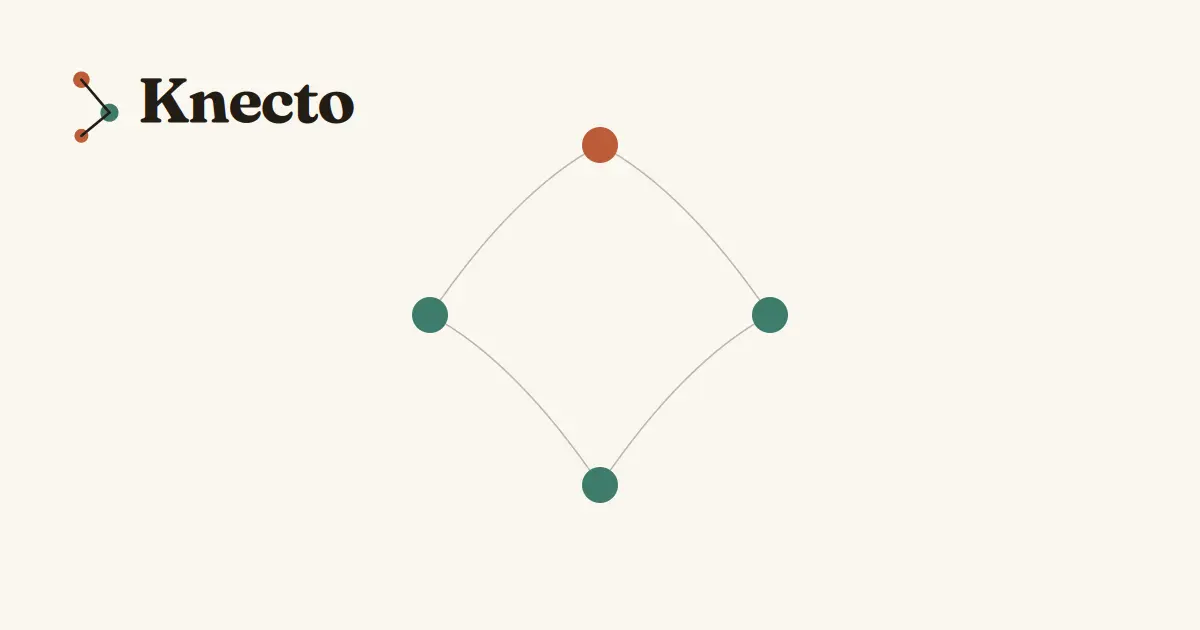
People picture an agent as a straight line: input goes in, output comes out, done. That’s how a chatbot works. An agent instead runs a cycle — plan, act, observe, decide — and repeats that cycle as many times as the task actually needs before finishing.
This loop is the entire mechanism. Everything else — tool use, memory, multi-agent coordination — is built on top of this same basic cycle repeating, including the coordination patterns covered in What Are Multi-Agent AI Systems? A Visual Breakdown. The specific plan-act-observe framing here traces back to the ReAct paper, the research that popularized interleaving reasoning with action in language models.
The Four Stages, One at a Time
Plan. The agent looks at the goal and decides what the next single step should be. Not the whole plan upfront — just the next move, based on everything it knows right now.
Act. It executes that step using an available tool — searching the web, calling an API, reading a file, sending a message. This is the only stage where something actually happens outside the model itself.
Observe. It looks at what came back from that action. Did the search return useful results? Did the API call succeed or throw an error? This result becomes new information for the next planning step.
Decide. Based on what it just observed, it decides: is the goal complete, or does this loop need to run again with a new plan? If complete, it produces a final answer. If not, it goes back to planning — now with more information than it had before.
Walking Through a Real Example
Say the goal is “find out if it’s going to rain tomorrow and warn me if I need an umbrella.” Plan: check a weather API for tomorrow’s forecast. Act: call the API. Observe: the response says 70% chance of rain. Decide: that’s a clear answer — no need to loop again — so it finishes with “Yes, bring an umbrella, 70% chance of rain tomorrow.”
A messier example: “find the cheapest flight to Chicago under $400.” Plan: search flights. Act: run the search. Observe: the cheapest result is $430, over budget. Decide: not done — loop again. Plan: try a nearby date. Act: search again. Observe: $380, within budget. Decide: goal met, finish with that result.
| Stage | What happens |
|---|---|
| Plan | Decide the next single step toward the goal |
| Act | Execute that step using a real tool |
| Observe | Check what actually came back |
| Decide | Finish, or loop again with new information |
The magic isn’t the model getting smarter mid-task. It’s the loop giving it a chance to check its own work and try again — something a single one-shot answer never gets to do.
Why This Loop Structure Matters
This is exactly what separates an agent from a script — and from a chatbot, for that matter, which is covered from a different angle in AI Agent vs ChatGPT: 5 Surprising Differences. A script runs the same fixed steps regardless of what happens along the way. An agent’s next step depends on what it just observed, which is what lets it recover from a search coming back empty, an API failing, or a first attempt landing outside the requirements.
It’s also why agents can be slower and more expensive than a single model call — each loop iteration is another full round of planning and observing, not a shortcut.
See the Loop Run Step by Step
Reading about the loop is one thing. Watching it actually execute against a real example makes the mechanism click. For the concept this loop sits inside, see What Is Agentic AI? A Simple Explanation With Examples. The demo below steps through the loop one stage at a time.